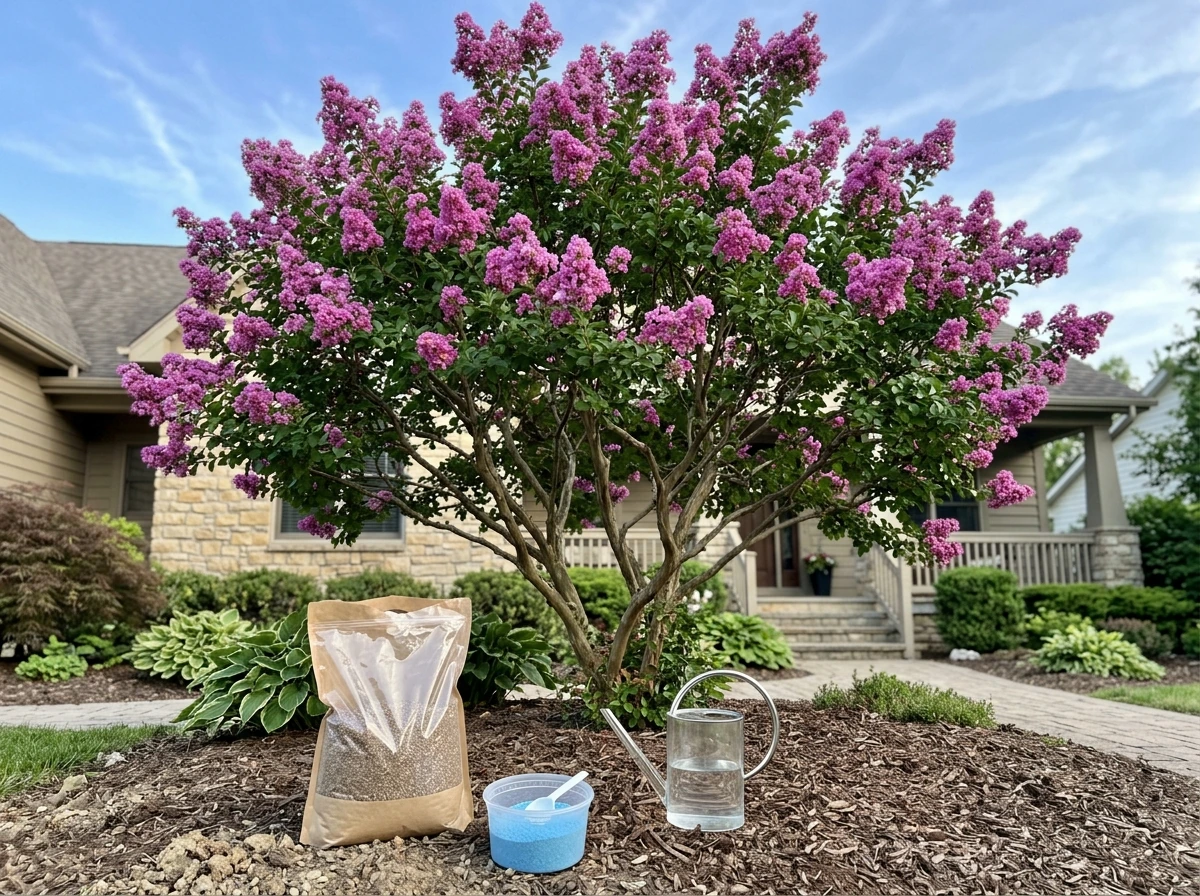
Yes, Miracle-Gro is good for shrubs. It works, it's widely available, and if you apply it correctly it will push healthy new growth and better flowering. The catch is picking the right formula for your specific shrub type and not overdoing it. Use the wrong product or the wrong amount and you can end up with burned roots, yellowing leaves, or a flush of soft growth that invites pests. Get it right and it's one of the easier ways to feed shrubs without a complicated routine.
Is Miracle-Gro Good for Shrubs? How to Use It

Marcus Weir
24 Mar 2026
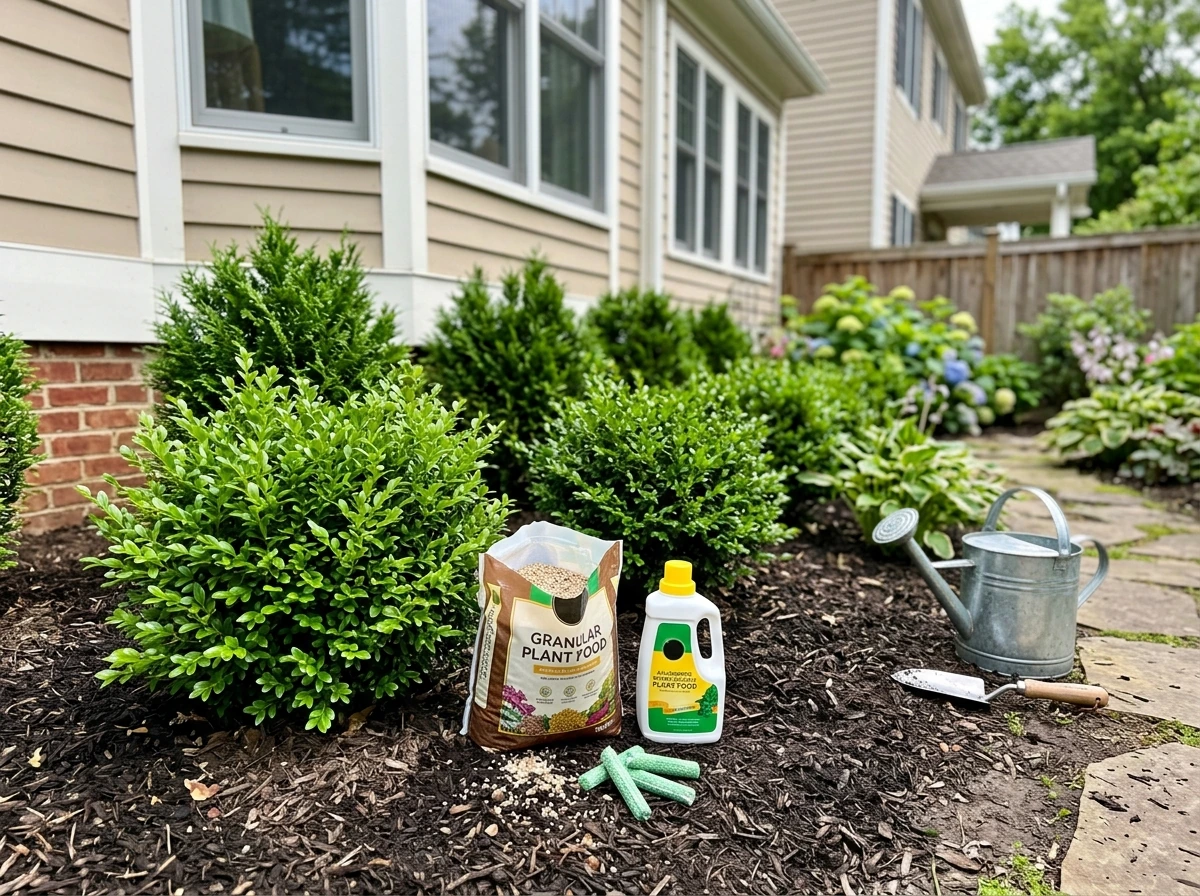
Quick answer: is Miracle-Gro good for shrubs?
For laurels, the answer is often yes, Miracle-Gro makes several products that are explicitly labeled for shrubs, and they do deliver results when used as directed. Miracle-Gro makes several products that are explicitly labeled for shrubs, and they do deliver results when used as directed. The water-soluble All Purpose Plant Food (24-8-16 NPK) works as a general-purpose option. The Shake 'N Feed Flowering Trees and Shrubs formula (18-6-12) is a better pick for anything that blooms. And for acid-loving shrubs like azaleas, camellias, and rhododendrons, the dedicated ericaceous formula is the right call. The brand is not a magic fix for a poorly sited or drought-stressed shrub, but if your plant is otherwise healthy and you just want to give it a nutritional boost, Miracle-Gro is a practical, well-tested choice.
Which Miracle-Gro formulas work best for shrubs
There are four Miracle-Gro products worth knowing about for shrubs. They each have different NPK ratios and delivery methods, which makes the choice matter more than people realize.
| Product | NPK | Best for | Release type |
|---|---|---|---|
| Shake 'N Feed All Purpose Plant Food | 12-4-8 | Evergreen and mixed shrubs needing steady nutrition | Continuous-release granular (up to 3 months) |
| Shake 'N Feed Flowering Trees & Shrubs | 18-6-12 | Flowering shrubs like hydrangeas, roses, spirea | Continuous-release granular (up to 3 months) |
| Water Soluble All Purpose Plant Food | 24-8-16 | Any shrub needing a quick nutrient boost | Fast-release liquid |
| Water Soluble Azalea, Camellia, Rhododendron Plant Food | Acid-optimized formula | Acid-loving ericaceous shrubs | Fast-release liquid |
| Tree & Shrub Plant Food Spikes | Varies by product | Established shrubs with root systems at the drip line | Slow-release spike |
If you have a flowering shrub like a hydrangea, lilac, or crepe myrtle, reach for the Shake 'N Feed Flowering Trees and Shrubs (18-6-12). is miracle grow good for crepe myrtles The higher nitrogen and potassium levels support both leaf growth and bloom production. For evergreens or mixed foundation shrubs where you just want steady growth without thinking about it, the All Purpose Shake 'N Feed (12-4-8) is lower-maintenance and still solid. If you have rhododendrons, azaleas, or camellias, do not use the all-purpose formula as your primary feed. Those plants need lower soil pH and the ericaceous Miracle-Gro formula is specifically set up for that, helping avoid the iron chlorosis (yellowing between leaf veins) that shows up when acid-lovers get the wrong nutrients.
How to apply Miracle-Gro to shrubs: granules vs liquid
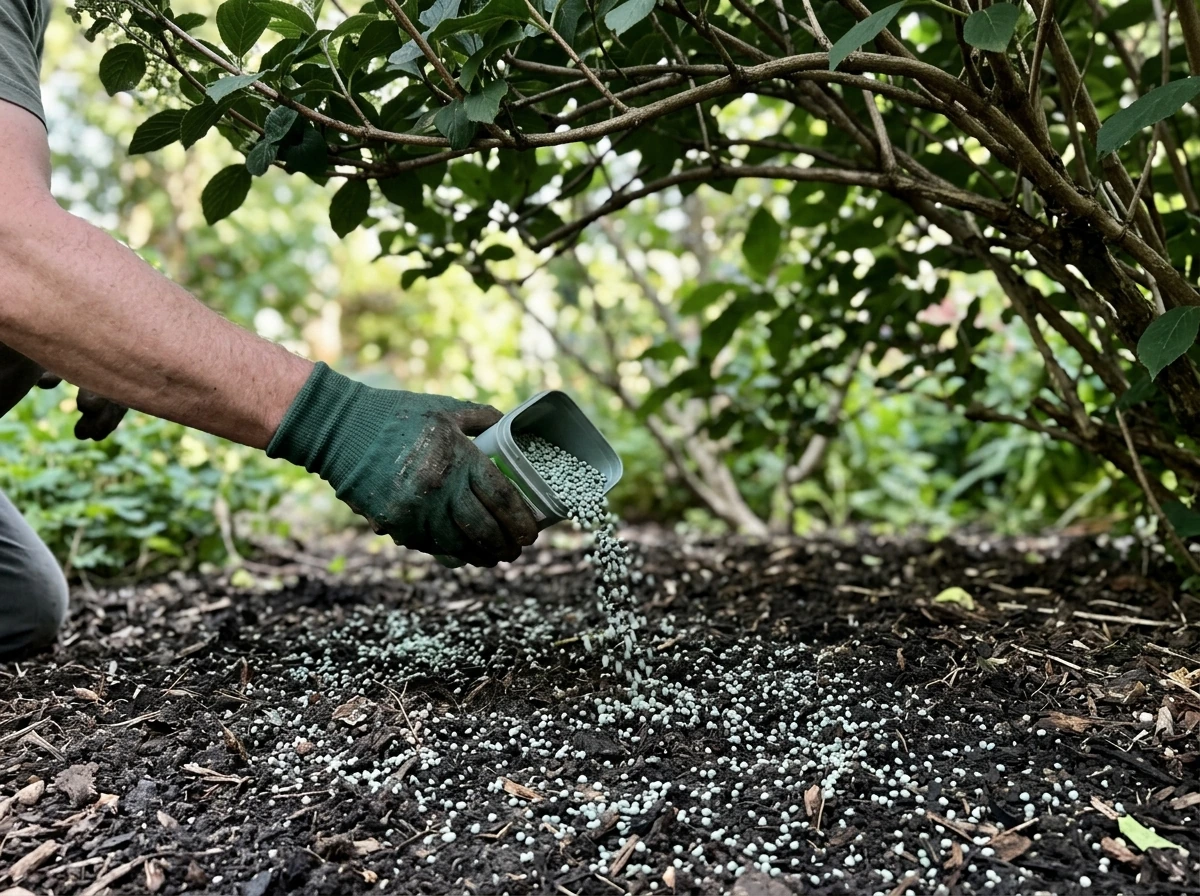
Applying granular Shake 'N Feed
Granular application is the lower-effort method and the one I lean on for established shrubs in the ground. Here is how to do it correctly based on the product guidelines.
- Spread the granules evenly over the soil within the spread of the shrub's branches (this area is called the drip line). Do not pile granules against the trunk or stem base.
- Keep granules off the foliage. If any land on leaves, brush or rinse them off. Fertilizer sitting on foliage can cause burns, especially in hot weather.
- Water thoroughly after applying. This is not optional. Watering activates the granules and moves nutrients down toward the roots where they can actually be used. Without watering, nutrients stay concentrated at the surface and can burn roots.
- Repeat every 3 months for best results. One application covers roughly a season, which makes it easy to remember: early spring, early summer, early fall.
Applying liquid water-soluble formula
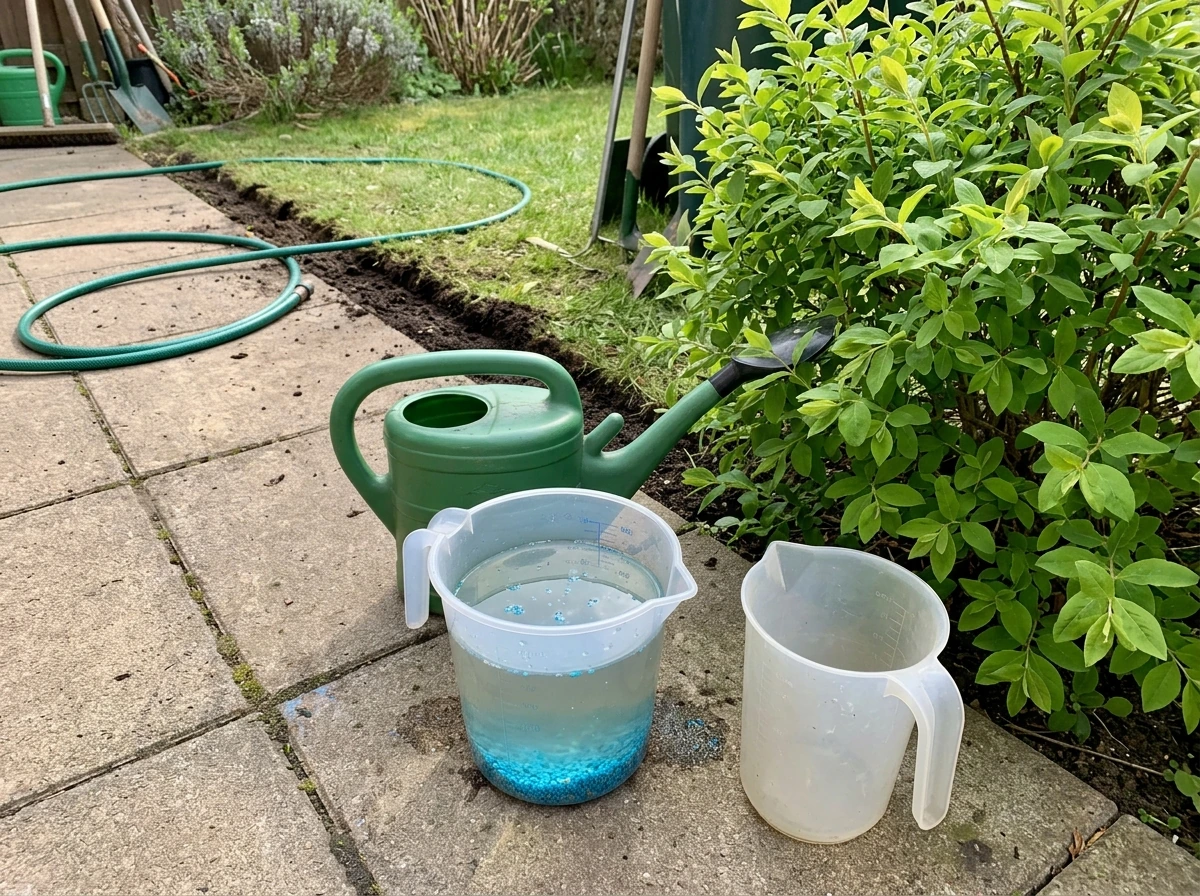
Liquid feeding is faster-acting and gives you more control over dosage, but it requires more frequent applications. The Water Soluble All Purpose (24-8-16) is a common choice. Mix it using the included scoop at the rate specified on the label (roughly 1 tablespoon per gallon of water for outdoor use). Apply it directly to the soil around the shrub at the drip line, not onto leaves, and water in if the soil is already dry. For the ericaceous Azalea/Camellia/Rhododendron liquid formula, the dilution is half a cap per 1 litre of water. Liquid feeds work faster than granules, which is useful in spring when you want to kick-start growth quickly, but because they flush through the soil relatively fast, you need to reapply more often than granular products.
Using plant food spikes
Miracle-Gro Tree and Shrub Plant Food Spikes are a third option worth mentioning for people who want a truly hands-off approach. You drive the spikes into the soil around the drip line (at least 3 feet apart from each spike) and they release nutrients slowly at root level. Because they feed below the surface and there is no surface granule contact, the risk of leaf burn from splatter is reduced. The trade-off is less flexibility. You apply once in spring and once in fall, and you cannot adjust the dose mid-season.
Timing and frequency: when to feed shrubs
Timing matters more than most people think. Feeding at the wrong time can push soft, frost-vulnerable growth in late season, or stress a plant that's already dormant or struggling.
- Start feeding in early spring when you see new growth emerging or just before. This is when the shrub's roots are actively taking up nutrients.
- For continuous-release granular products, reapply every 3 months through the growing season. In most climates that means early spring, early summer, and early fall.
- Stop feeding 6 to 8 weeks before your first expected frost. Late-season feeding encourages soft new growth that is vulnerable to frost damage.
- For spikes, apply once in spring and once in fall, placing them around the drip line as directed.
- Liquid feeds can be used more frequently during the active growing season, roughly every 1 to 2 weeks if the plant needs it, tapering off as growth slows in late summer.
In practice, I keep things simple: granular Shake 'N Feed in early spring does most of the heavy lifting, with a second application in June and sometimes a third in early September if the shrubs look like they need a push. That schedule avoids the most common timing errors.
How much to use: rates, dilution, and preventing fertilizer burn
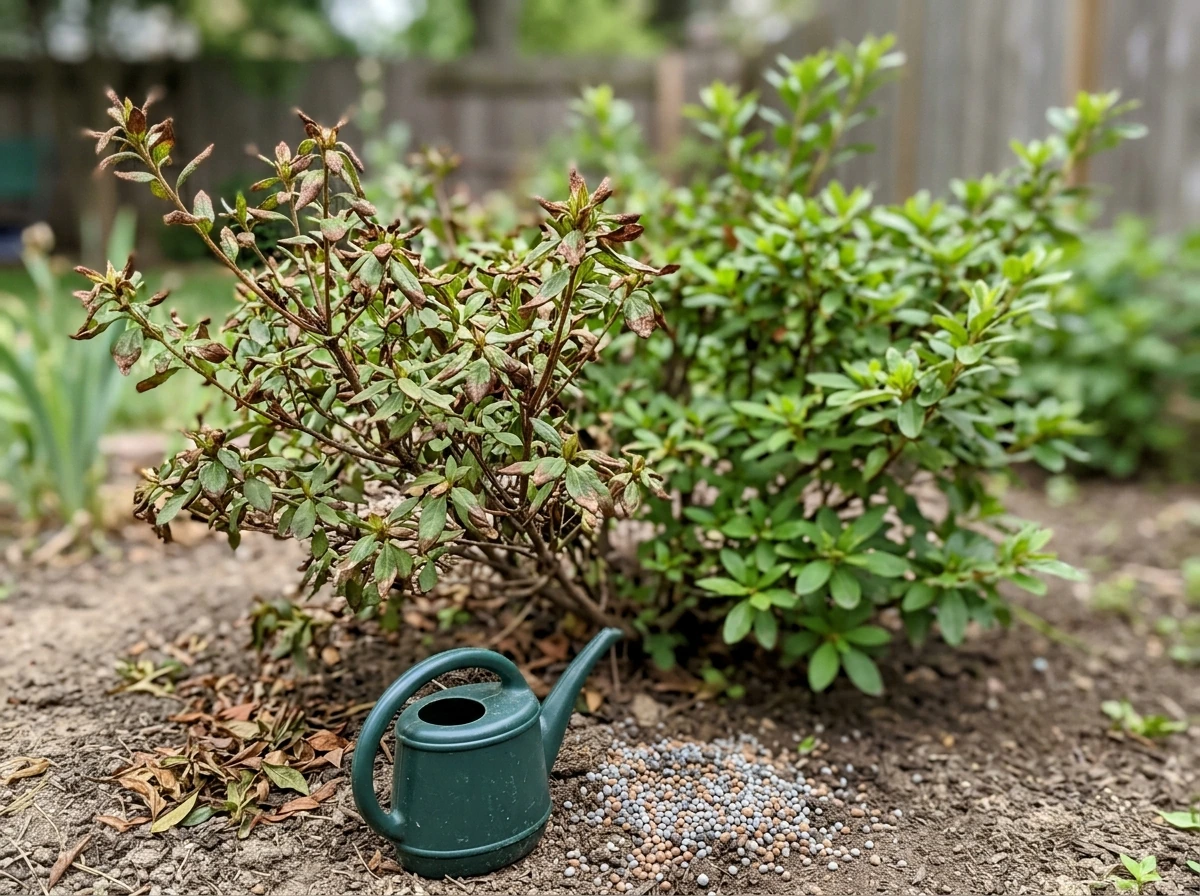
Fertilizer burn happens when too much concentrated nutrient salt pulls moisture out of roots, essentially desiccating them. It shows up as brown leaf tips or edges, wilting despite adequate water, and in serious cases, dieback. Here is how to stay on the safe side.
- Follow the label rate exactly, at least on your first application. It is tempting to add a little extra, but the labeled rates are tested for safe, effective feeding. More is not better with fertilizer.
- Never apply granules to dry soil without watering immediately afterward. Concentrated granules sitting in dry soil near roots will burn them. If rain is not expected within a day, water right after you spread.
- Keep granules away from the trunk or stem base and off foliage. The drip line, not the base, is where the feeding roots actually are.
- For liquid applications, stick to the dilution rate on the label. For the all-purpose water soluble formula, that is roughly 1 tablespoon per gallon. For the ericaceous liquid, it is half a cap per litre. Do not eyeball it.
- If you are feeding a newly planted or recently transplanted shrub, hold off for at least 4 to 6 weeks. New roots are tender and more burn-prone. Let the plant establish first.
One practical check: if your shrub already has vigorous new growth and full, healthy-looking leaves, it may not need feeding at all. A shrub that looks lush and is growing well likely has adequate nutrition, and adding more can do more harm than good. Feed to solve a problem or support active growth, not just as a reflex.
When not to use it: signs you should pause and troubleshoot
Miracle-Gro is not always the answer. There are situations where applying fertilizer will make things worse, and recognizing them saves you from chasing the wrong fix.
- Wilting or yellowing from drought or root damage: If your shrub is water-stressed, its roots cannot absorb nutrients properly. Adding fertilizer to a drought-stressed plant pushes more salt into soil that already has compromised root function. Fix the watering issue first.
- Soil drainage problems: Waterlogged soil means roots are already under stress. Fertilizing on top of that accelerates decline. Improve drainage before you feed.
- Winter or late fall: Feeding in the dormant season is a waste at best and harmful at worst. Wait until you see active new growth in spring.
- Brown leaf tips after your last feeding: This is a classic fertilizer burn sign. Stop feeding, water the soil thoroughly to flush out excess salts, and wait several weeks before reapplying at a reduced rate.
- Acid-loving shrubs showing yellow leaves with green veins (chlorosis): This usually points to a pH or iron availability issue, not simple nutrient deficiency. Using a general all-purpose formula will not fix it. Switch to the ericaceous formula and check your soil pH.
- Very recently transplanted shrubs: As noted above, wait 4 to 6 weeks before feeding. Roots need time to settle into new soil before taking on fertilizer salts.
A good rule of thumb: if the plant looks genuinely unhealthy, identify the actual cause before fertilizing. Fertilizer treats nutrient deficiency. It does not treat disease, pest damage, overwatering, poor drainage, or wrong soil pH.
Alternatives and better-fit options for different shrub needs
Miracle-Gro is convenient and effective, but it is not the only option and for some shrubs or growing situations, something else fits better.
| Shrub type or situation | Miracle-Gro option | Worth considering instead |
|---|---|---|
| General garden shrubs (evergreen, deciduous) | Shake 'N Feed All Purpose 12-4-8 | Slow-release granular like Osmocote (longer feed window, less burn risk) |
| Flowering shrubs (hydrangea, spirea, lilac) | Shake 'N Feed Flowering Trees & Shrubs 18-6-12 | Rose-specific fertilizers if bloom performance is the priority |
| Acid-loving shrubs (azalea, camellia, rhododendron) | Water Soluble Azalea/Camellia/Rhododendron formula | Ericaceous compost as a soil amendment, acidifying granular fertilizers |
| Organic garden or no-synthetic preference | None of the above (all are synthetic) | Fish and seaweed-based liquid feeds, composted organic matter, bone meal |
| Newly planted shrubs needing root establishment | Skip Miracle-Gro for 4-6 weeks | Mycorrhizal inoculants and root-stimulating products (low-N, high-P) |
| Established shrubs in fertile soil | May not need fertilizer at all | Compost mulch as a low-input, slow-release alternative |
If you want to keep things in the Miracle-Gro range but with less risk of overfeeding, the spikes are worth considering for established shrubs. Two applications a year is easy to manage, and because nutrient release happens at root depth rather than at the soil surface, the margin for burn is lower. For shrubs in containers, however, I prefer liquid feeding because you have tighter control over what the plant is getting and when.
For most people reading this, the practical answer is: grab the Shake 'N Feed Flowering Trees and Shrubs if you have bloomers, or the All Purpose version for everything else, apply it in early spring at the labeled rate within the drip line, water it in well, and repeat every 3 months through the growing season. That routine will serve the majority of garden shrubs well without overcomplicating things. If you have acid-lovers like azaleas or rhododendrons, swap in the ericaceous formula and you are set. Keep an eye on the foliage after feeding and dial back if you see browning edges or unusually soft, floppy new growth.
FAQ
Can I use Miracle-Gro on shrubs in containers or only for in-ground plants?
Yes, but only if the product is still appropriate for container conditions. Use liquid or dilute-and-water-in feeds more often rather than relying on slow-release spikes in pots, since containers dry out and nutrient salts can build up faster in limited soil volume.
How soon after planting or transplanting should I fertilize with Miracle-Gro?
Avoid feeding immediately after planting, transplanting, or major root disturbance. In most cases, wait until the shrub shows active new growth and has been watered consistently, then feed at the labeled rate, because fresh roots are more prone to fertilizer burn.
What should I do if my shrub shows fertilizer burn after using Miracle-Gro?
If you see burn, stop fertilizing right away and focus on recovery watering. Rinse the soil lightly to help flush surface salts, then keep watering consistent but not soggy. In severe cases, leach-runoff may help, but do not fertilize again until the new growth looks normal.
Can I mix Miracle-Gro with compost or other fertilizers?
Yes, but it is easy to overfeed. Do not combine Miracle-Gro with other complete fertilizers at the same time, and watch for double-dosing the same nutrients. If you used compost recently, consider skipping a feeding or using the lower end of label guidance and reassessing foliage before adding more.
What if my shrubs are not growing much yet, should I still fertilize in early spring?
For shrubs, feeding schedules are best tied to growth and plant type, not the calendar alone. If spring is unusually cool or the shrub is barely growing, delay feeding, because pushing nutrients when growth is slow increases the odds of soft growth or leaf issues.
Is it safe to fertilize shrubs with Miracle-Gro in summer or fall?
Yes, if the label supports it and the shrub is actively growing. However, late-summer and fall feeding increases the chance of tender growth that can be damaged by cold. If you must fertilize in cooler months, use the timing window on the label and stay conservative.
Should I change my fertilizer plan if my azalea or rhododendron looks yellow between leaf veins?
Yes, especially for acid-loving shrubs, but treat it as a pH-sensitive situation. If your azalea, rhododendron, or camellia is already showing chlorosis, confirm soil conditions before feeding, because repeated fertilizer with the wrong pH program can keep the problem going even if it looks like a nutrient fix.
How can I tell when Miracle-Gro will not help and I should troubleshoot something else first?
Don’t assume every problem is a nutrient issue. If the shrub has leaf spotting, wilting with soggy soil, pest damage, or symptoms that match disease or drought stress, fertilizing can worsen stress. Take a quick look at drainage and watering first, then feed only after the underlying cause is corrected.
Where exactly should I apply granules or liquid, around the trunk or at the drip line?
In most gardens, you will get better results by applying around the drip line, not over the main trunk or directly on leaves. Spread the granules evenly, keep them off foliage, and water in thoroughly so nutrients reach roots where they can be used.
Does weather or soil moisture affect how strong Miracle-Gro should be for shrubs?
Yes. Even with correct dilution, feeding can be too concentrated if the soil is dry or if you mix more than the label rate. Always water the soil first if it is very dry, mix precisely, and follow the label’s reapplication interval so you do not create salt buildup.
Next Article
Is Miracle-Gro Good for Crepe Myrtles? Safe Feeding Schedule
Miracle-Gro for crepe myrtles: safe types, exact feeding schedule, proper rates, and alternatives if it’s not ideal.